





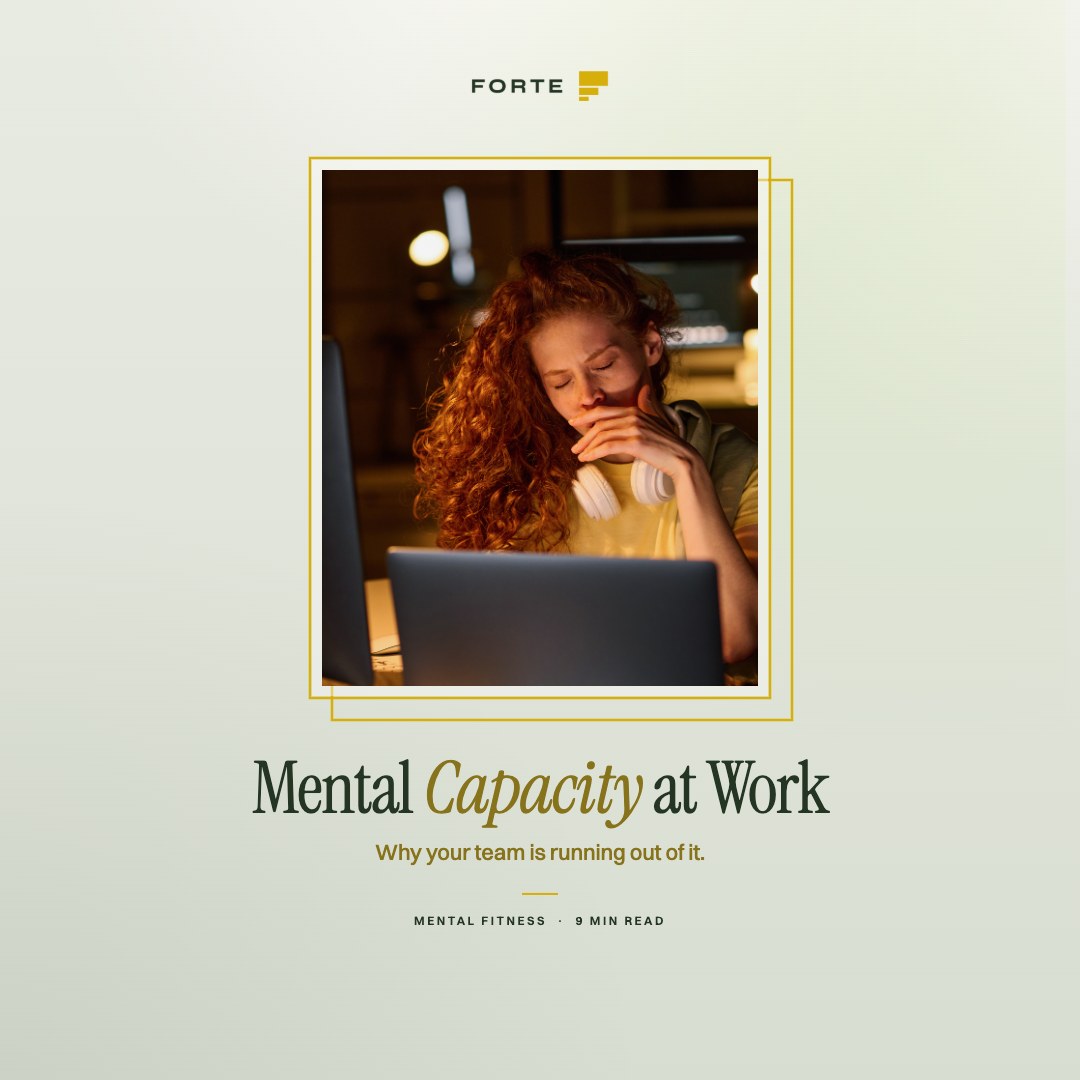
Your team is not underperforming. They are over capacity.
The Crisis Nobody Names
Those are not the same problem. They do not have the same solution.
Not full of complaints or excuses. Full in the way a browser is full when too many tabs are open. Slower. Glitchier. Closer to crashing than anyone wants to admit.
If you are an HR leader right now, you already feel this. The requests piling up. The managers who cannot coach because they are barely keeping up themselves. The high performers who used to absorb pressure like it was nothing, now making small errors, going quiet, leaving meetings a little hollowed out.
Cognitive load management at work is a trainable problem. Most organizations just do not have a training system for it yet.
How Cognitive Load Impacts Your Team
Cognitive load is the total amount of mental effort your brain is carrying at any given moment.
It is not just the number of tasks on a to-do list. It is the weight of unresolved decisions, ambient uncertainty, emotional labor, context-switching, and the constant pressure to stay switched on.
Modern work has quietly tripled this load. Hybrid schedules, always-on communication, restructuring cycles, performance pressure, and the blurred line between work and life have all added weight. The brain was not designed to sustain this without deliberate training and recovery.
When cognitive load exceeds a person's current Capacity, the first things to go are not the tasks they hate. The first things to go are clarity, patience, and the ability to think ahead.
The things that make someone actually good at their job.
This is not burnout yet. But it is the road there.
Signs Your Team Is at Capacity (And What Managers Often Miss)
You may already be watching it happen. Some of the signs are loud. Most are quiet.
-
Decisions are escalating.
Calls that used to get made are now sitting on someone else's desk. People who were proactive have gone reactive, waiting to be told what to do.
-
Creativity is rationed.
Problem-solving has dried up. Collaboration feels more effortful. Small frictions are becoming bigger conflicts.
-
High performers are pulling back.
Not pushing forward. Not quitting. Just rationing the energy that used to make your culture feel alive.
And here is the part that makes this hard to name: nobody is technically doing anything wrong. Attendance is fine. Output is acceptable. But something has shifted.
That is Capacity under strain.
What Is Mental Capacity?
At Forte, Capacity is one of the four permanent pillars of Mental Fitness training.
Capacity is defined as focus, resilience, and stress tolerance.
The trained ability to stay present under pressure, process difficulty without being derailed by it, and recover so that performance is sustainable, not just temporary.
This is not a soft skill. It is a trainable one. Just as physical endurance is built through progressive, intentional effort over time, mental Capacity is built the same way. You do not get it by hoping your team will be resilient. You build it by giving them a real practice.
Composition
Who you are when no one is watching. Identity, values, the inner ground.
Capacity
Focus, resilience, stress tolerance. The first pillar to break down under workplace pressure, and the one most organizations have no real plan to address.
Flexibility
The capacity to adapt, reframe, and stay open when conditions change.
Endurance
Sustained drive across time. Motivation that stays connected to meaning.
What Is Mental Fitness, and Why It Changes Everything for HR Leaders
Mental Fitness is a new term. It is worth pausing here to define it clearly, because it is not what most people reach for when they think about employee wellbeing.
Mental Fitness is the training of Agency: the deliberate cultivation of the capacity to act with intention, clarity, and alignment.
It is not therapy. It is not crisis support. It is not an EAP. Those things matter and they serve a different purpose. Mental Fitness is the proactive work. The training that happens before the breakdown, not after it. Think of it as the gym, not the emergency room.
When you train Mental Fitness, you are building the inner infrastructure that allows a person to handle more, recover faster, and make better decisions under pressure. Capacity is the pillar that sits at the center of that infrastructure for most working adults.
Why Traditional Wellness Programs Miss the Cognitive Load Problem
Here is what most corporate wellness programs offer when cognitive load becomes a problem: a mindfulness app, a webinar on stress, maybe an EAP referral if things get serious.
None of that is wrong. But none of it is training.
A ten-minute meditation is a nice moment. It is not a rep.
It does not build Capacity the way repeated, intentional, coach-supported practice does. Your team does not need more information about why stress is bad. They need a structured way to train through it.
The gap between awareness and operationalized change is where most wellbeing investments quietly disappear. HR leaders know this. You have likely lived it. You championed a program, it launched well, and six months later almost nobody was using it because it never felt like something you actually do. It felt like something you browse.
Forte is built differently. Sessions with a Forte Coach are bookable within 24 hours. The work is proactive, personalized, and grounded in the four pillars. Members leave with something they can apply, not just something they heard.
Across more than 1,700 reviews, Forte holds a 4.9-star rating. That is not an accident. It is what happens when mental training is taken as seriously as the work itself.
What Training Capacity Looks Like in Practice
Building Capacity is not about adding more to your team's plate. It is about helping them process, recover, and reorient so that what is already on the plate does not crush them.
In practice, it looks like this:
-
A manager
learning to recognize when their cognitive load is spiking and having tools to reset before a difficult conversation.
-
A team member
who used to spiral under ambiguity learning to stay grounded and act from clarity instead.
-
A high performer
who always pushed through exhaustion learning to restore their energy deliberately, so they are not running on fumes by Thursday.
These are not personality changes. They are trained behaviors. And they are built one rep at a time.
That is what Forte means by Train Within. The work is internal. But the results show up everywhere.
The Internal Case You Need to Make
If you are reading this, you probably already believe your team needs more than what they are currently getting. The harder job is making that case upward.
Here is the language that tends to land: cognitive load is a performance variable, not just a wellbeing concern. When your people are running at reduced Capacity, the quality of their decisions, relationships, and output goes with it. Training Capacity is not a benefit perk. It is a performance investment.
You do not need to argue for wellness. You need to show that mental Capacity is a business asset, and that without a deliberate training environment, it erodes under normal workplace pressure.
The question isn't whether your team needs this. It's whether you have a system to deliver it.
Forte gives you the framework to make that case, and the platform to deliver on it.
If your team is full, it is time to help them train.